
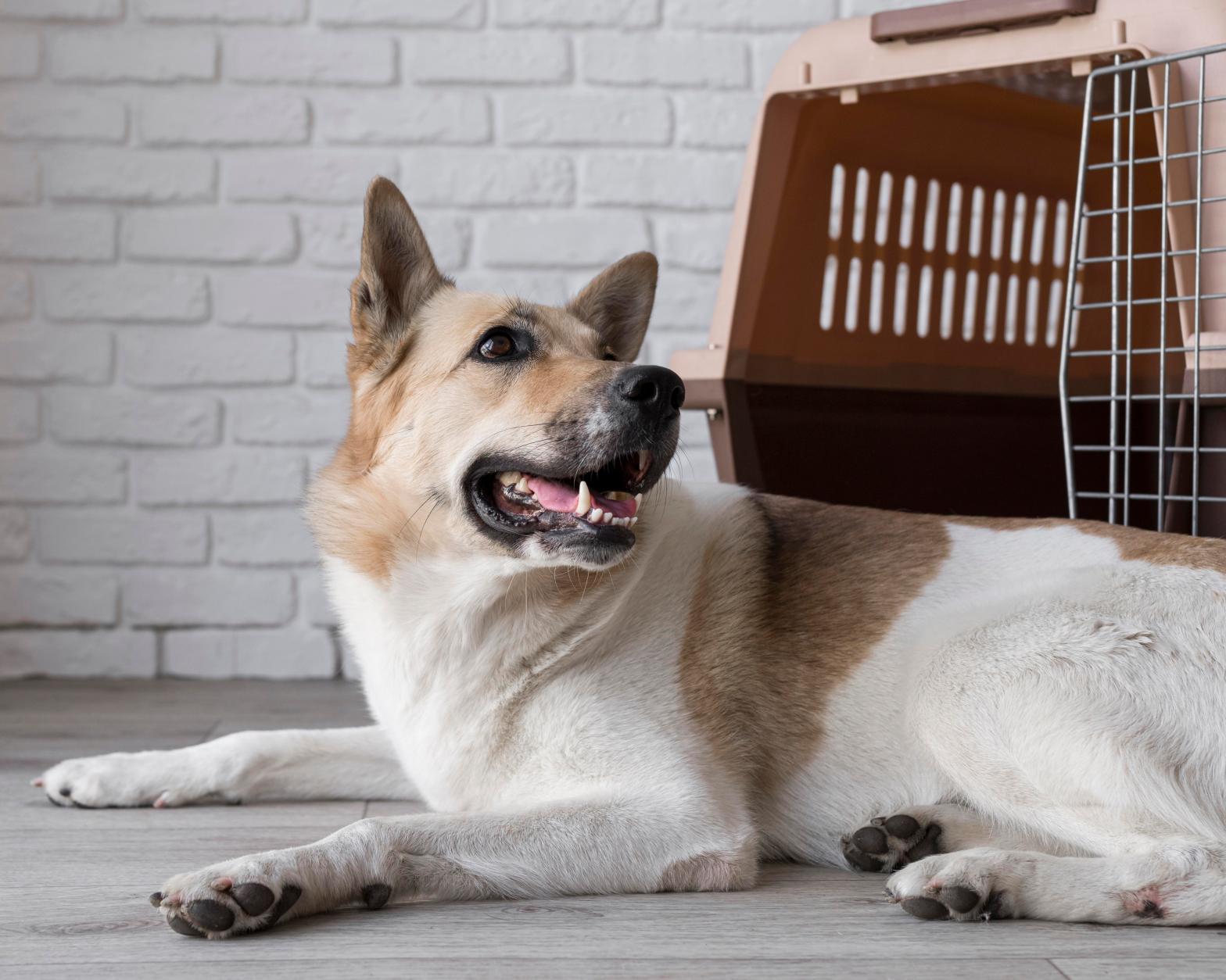
Instinctively, dogs will seek out small spaces to create a protective shelter for themselves. They are den animals by nature so they enjoy being in compact, enclosed spaces because of the sense of security and safety that it provides. Crates offer the same feeling of protection and comfort as a den, and can be a place for your dog to find refuge. This positive relationship has to be built up, but once it has been established, most dogs will even seek out the crate as a place for them to retreat to when they are overstimulated by things like loud noises outside, having a lot of guests in the house, etc. Since the crate should be a positive and safe place for your dog, it is important that you never use it as a punishment. You want your dog to feel secure in their crate and see it as a sanctuary.
When first introducing your dog to the crate, start by putting them in it for short periods of time and associating the crate with things that they enjoy. This can include feeding your dog in the crate, giving them their reward toy or chew item when they are in the crate, or simply using treats to encourage them to go in and out. You will want to avoid making the initial experience merely “get in the box” and closing the crate door. By having the focal point of the interaction based on something enjoyable while allowing your dog to freely walk in and out of the crate is beneficial to building up a positive relationship with the crate.
Another way to desensitize your dog to spending time in the crate is by putting it inside of your car. When your dog is inside of the crate in your car while you are driving around, they will be preoccupied with what is happening outside as opposed to the idea of being stuck inside the crate. You can then take your dog to different places, get them out, walk them around and play for a short while, and then put them right back in the crate and head to another location. By doing this you are reinforcing the idea that they are not stuck in the crate forever and being in it leads to something fun and positive.
If your dog has already had a lot of bad conditioning with the crate and they bark, whine, or freak out when they are in it, the next step for them would be to normalize being in the crate. To do so you can bring the crate into a room in your house that you spend a lot of time in. You can help your dog assimilate to the crate by having it in the living room or in your sleeping space, which allows them to spend time with you while getting used to being confined. Dogs are highly social animals so placing the crate in an area where you hang out for long periods of time and not completely isolating them at first helps them adjust to being in the crate. This also gives you the opportunity to supervise and reinforce good behavior by rewarding your dog with treats when they are laying down quietly and relaxing.
While the process is not always easy, the benefits to crate training are plentiful. It can help with potty training puppies, make driving in the car easier, assist in the healing process after an injury or surgery, ensure your dog’s safety when they are unsupervised, and help the dog take ownership of their behavior. Crate training supports the dog’s ability to self-soothe and learn how to relax and feel comfortable spending time alone. Being in a crate encourages your dog to choose nothing and just relax. It gives them a safe place where they do not have to make any decisions and can decompress.
Photo attribute: <a href=”https://www.freepik.com/photos/dog”>Dog photo created by freepik – http://www.freepik.com</a>
 The Canine Mind